


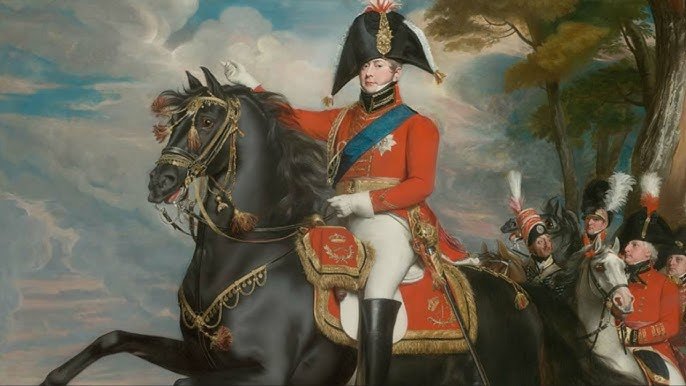
George Seymour Crole, a name that whispers through the annals of British history, offers us a character tangled in mystery and military valor. Born on August 23, 1799, and exiting the world stage on June 13, 1863, Crole’s life was one that walked hand-in-hand with rumor and whispered secrets. He was a British Army officer distinguished for his service, yet he wore a cloak defined less by medals and more by mysterious parentage allegedly linked to royalty. The echoes of his existence are heard through tales that weave together war, status, and possibly, a hint of royal blood.
Early Life in Chelsea, London
To begin this tale, we must travel back to Chelsea, London, where the air of intrigue was first breathed by Crole. Born into this world under curious circumstances, his early family context lays the foundation for the legend that follows him—a possible connection to George IV of the United Kingdom and a woman by the name of Eliza Fox. Was Crole truly the specter of royal indiscretions? It’s a tantalizing thought this young soul may have been embroidered into the fabric of royal secrets. Crole’s formative years in Chelsea paint a picture of an individual surrounded by whispers and expectations that only whispered louder as he grew.
Education Path
Set against this backdrop, Crole’s education trajectory adds another layer to his multifaceted life. Enrolling at the Royal Military Academy, Sandhurst, was not just a career choice—it was a key that unlocked the door to a world of greater possibilities. Here, at Sandhurst, Crole didn’t just sharpen his military acumen; he cemented the respectable foundation upon which his career would soar. His time within these walls was tantamount to transformation, laying the groundwork for the soldier and perhaps, the figure close to power he was destined to become.
Military Career Milestones
Crole’s journey in military uniform started in 1817, with his commission as an Ensign, marking the genesis of an illustrious ascension through the ranks. This was no ordinary climb; it was a testament to both his skills and perhaps the influence of unseen forces guiding his path. Lieutenant in 1820, Captain by 1823, and Major in 1826—the incremental honors read like timestamps of a life diligently spent in the service of his country. His tenure in the 11th Regiment of Light Dragoons stationed in the East Indies solidified his legacy as a seasoned campaigner. But there was more to his story than just dates and titles.
Personal Life and Legacy
Some men marry, some abstain, and Crole fell into the latter category, choosing—or perhaps destined— to leave no direct lineage behind. His life came to an end at Chatham, Kent, specifically at the Sun Hotel, wrapping up a tale shrouded in solitude and enigmatic legacy. Yet, his life wasn’t completely unnoted by those who surround the corridors of power. You see, George IV, in a draft of a will, made mention of “my young friend George Seymour Crole.” Curioser and curioser: was this a nod from a royal father or merely favoritism bestowed upon an exceptional army man?
Speculations and Historical Gossip
Crole’s life cannot simply rest on the laurels of his military service—it’s dusted with speculations worthy of the finest of British tabloids. Could the man with such unassuming bearing truly have been the king’s son? Speculations fly like flocking birds, and historians like Anthony Camp offer tantalizing notes that stir the pot. Camp’s musings on George IV’s references in draft documentation keep the rumors alive, much like a period drama without a finishing act. What is undeniable, however, is that Crole’s life, marked by such speculative genealogy, continues to invite curiosity.
Conclusion
George Seymour Crole will forever remain an enigmatic persona — a beacon of gallantry on one hand, a riddle wrapped in royal whispers on the other. His path tells of a man who defied simple categorization, leaving behind a legacy not defined by progeny but by whispers of connections that challenge the mind. His life, oscillating between service and hearsay, intrigues us from beyond the grave, a fitting allegory for historical intrigue. And as we ponder on his maelstrom of a biography, we’re reminded of the complex dance between duty and possible divine right—an intrigue we can’t seem to pull away from.
For more intriguing explorations of little-known historical figures and their influence on our world today, you might want to check out this resource that dives deeper into the layers behind such captivating stories.
Read Also: